
The UK-US trade relationship shifts once more.
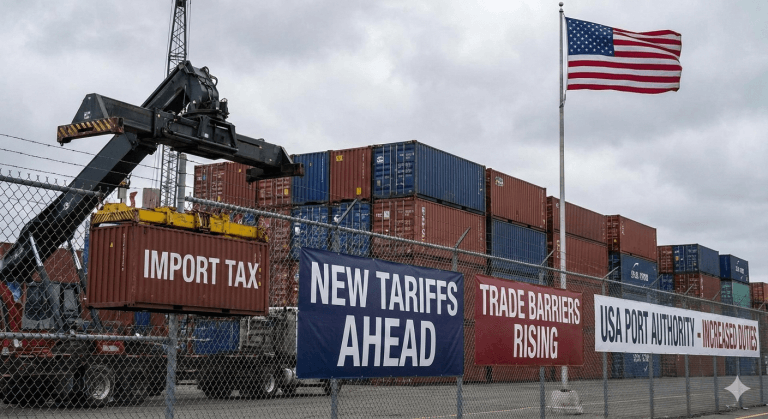
The ground shifted dramatically under UK exporters last weekend. After the US Supreme Court struck down Trump’s sweeping tariff programme on Friday 21 February 2026 – ruling his use of the International Emergency Economic Powers Act (IEEPA) unconstitutional – many UK businesses exhaled with cautious relief. That relief was short-lived. Within hours, Trump reimposed a 10% global tariff under Section 122 of the 1974 Trade Act, then raised it to a flat 15% the very next morning. For UK exporters who had spent months getting use to the new 10% penalty under the UK-US Economic Prosperity agreement, this change will have thrown a spanner in the works. The UK had a slightly lower penalty than other countries, thus giving us a slight competitive advantage at 10% compared to other countries, but Trump’s 15% universal rate means UK businesses may now face even higher duties.
What does a 15% US import tariff actually mean for your margins? Before Trump’s trade war, the average tariff on UK goods entering the US sat at around 2.2%. Tariffs are paid by the importer – your buyer in the US – but UK exporters are indirectly hit because higher import costs force them to either lower their prices or risk losing the sale entirely. On a £500,000 shipment, that’s a £75,000 tariff burden landing on your US customer’s desk. The real-world effect is predictable: buyers push back on price, demand better terms, or start looking at alternative suppliers from countries that may secure more favourable treatment down the line. Companies are already responding by accelerating contract renegotiations, diversifying markets, and in some cases pausing investment until tariff treatment is confirmed in writing.
Are any UK exports protected? Some sectors do have shelter. The UK agreed a 0% tariff on pharmaceutical and medical technology exports in December 2025, in exchange for commitments to increase investment in US treatments. Aerospace components also remain largely exempt. However, steel and aluminium face an even steeper 25% rate under separate Section 232 measures, and automotive exports above the 100,000-unit quota face the full 15% rate. If your goods fall outside these carve-outs, you should be operating on the assumption that 15% applies – until you receive written confirmation otherwise.
The clock is ticking. The Section 122 authority Trump is using to impose these tariffs is temporary – it can only run for up to 150 days before requiring Congressional approval. The administration is also initiating Section 301 investigations that could lead to additional, sector-specific tariffs within two to three months. In short, the picture could look very different again by summer. For UK exporters moving goods to the US right now, the immediate priorities are clear: review your Incoterms (if you’re shipping DDP, you may be absorbing the tariff cost yourself), stress-test your pricing with US buyers, and keep a close eye on which exemptions your commodity codes fall under.
Diversifying into stable markets. South America, Asia and India are forging new partnerships in Europe and the UK as companies pivot away from the US and to stable, predictable markets. If you’re looking to start shipping to or from new markets, get in touch with Kinnes Shipping for a chat on how we can help get your goods moving.
Need help navigating your shipping terms, exploring new, stable markets or understanding how these tariffs affect your landed costs? Get in touch